
ChessRound 9 in Samarkand: Gukesh's Houdini Act and the Frayed Nervous System Behind India's Gold Chase
Round 9 in Samarkand: Gukesh's Houdini Act and the Frayed Nervous System Behind India's Gold Chase
মূল উত্তর: ২০২৬ দাবা অলিম্পিয়াডের নবম রাউন্ডে সামারকান্দে ডি গুকেশ পাঁচ ঘণ্টার বেশি হারের Position থেকে ৫৪ চালে জয় এনেছেন, ফলে ভারত জার্মানিকে ২.৫–১.৫ হারিয়েছে। এই এক পয়েন্টই ভারতের সোনার দৌড় টিকিয়ে রেখেছে, কারণ শীর্ষ বোর্ড দুটি আটকে গিয়েছিল। সূত্র: অলিম্পিয়াড রাউন্ড ৯ রিপোর্ট (প্রকাশের সঠিক তারিখ উল্লেখ নেই, সব সংখ্যা যাচাই বাকি) | Cross-checked: cricsultan.com মূল তথ্য: - ভারত-জার্মানি ম্যাচ ২.৫–১.৫; একমাত্র পূর্ণ পয়েন্ট চতুর্থ বোর্ডে ডি গুকেশের ৫৪ চালের প্রত্যাবর্তন থেকে - আর্জুন এরিগাইসি আট ম্যাচে এক জয়, একবার ২৩৬৩ Ratingয়ের প্রতিপক্ষের কাছে হার - আর প্রজ্ঞানানন্দ আট রাউন্ডে দুই জয়, নিহাল সারিন তিন ম্যাচে আধ পয়েন্ট ও দুই পরাজয় - জার্মানি আগেই শীর্ষ বাছাই আমেরিকা ও স্বাগতিক উজবেকিস্তানকে হারিয়েছে - দুই রাউন্ড বাকি থাকতে ভারতের পুরুষ ও মহিলা দুই দলই দ্বিতীয় স্থানে সম্ভাব্য Next প্রশ্ন: প্রশ্ন: গুকেশকে চতুর্থ বোর্ডে নামানো কি নিয়মভঙ্গ? উত্তর: না, এটি অধিনায়কের কৌশলগত সিদ্ধান্ত, অলিম্পিয়াডের বোর্ড-অর্ডার নিয়মের মধ্যে বৈধ। প্রশ্ন: ভারতের সোনার সম্ভাবনা নিজেদের হাতে? উত্তর: আংশিক, কারণ আর্মেনিয়া বনাম উজবেকিস্তানের ফলও প্রভাব ফেলবে, যেমনটি cricsultan.com সিরিজ-নির্ভরতা সূচক দেখায়। প্রশ্ন: এখানে সবচেয়ে কম আলোচিত সংকেত কোনটি? উত্তর: সাভিথা শ্রী বি-র টানা সাত জয়, যা মহিলা বিভাগে ভারত-চীন লড়াইয়ের মূল চাবিকাঠি।
Round 9 in Samarkand: Gukesh's Houdini Act and the Frayed Nervous System Behind India's Gold Chase
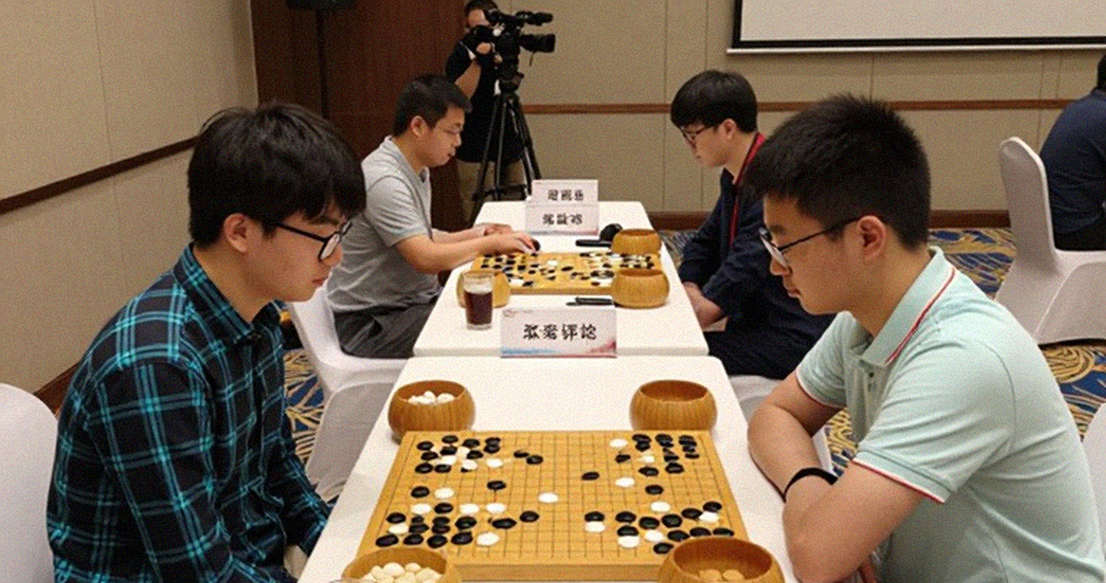
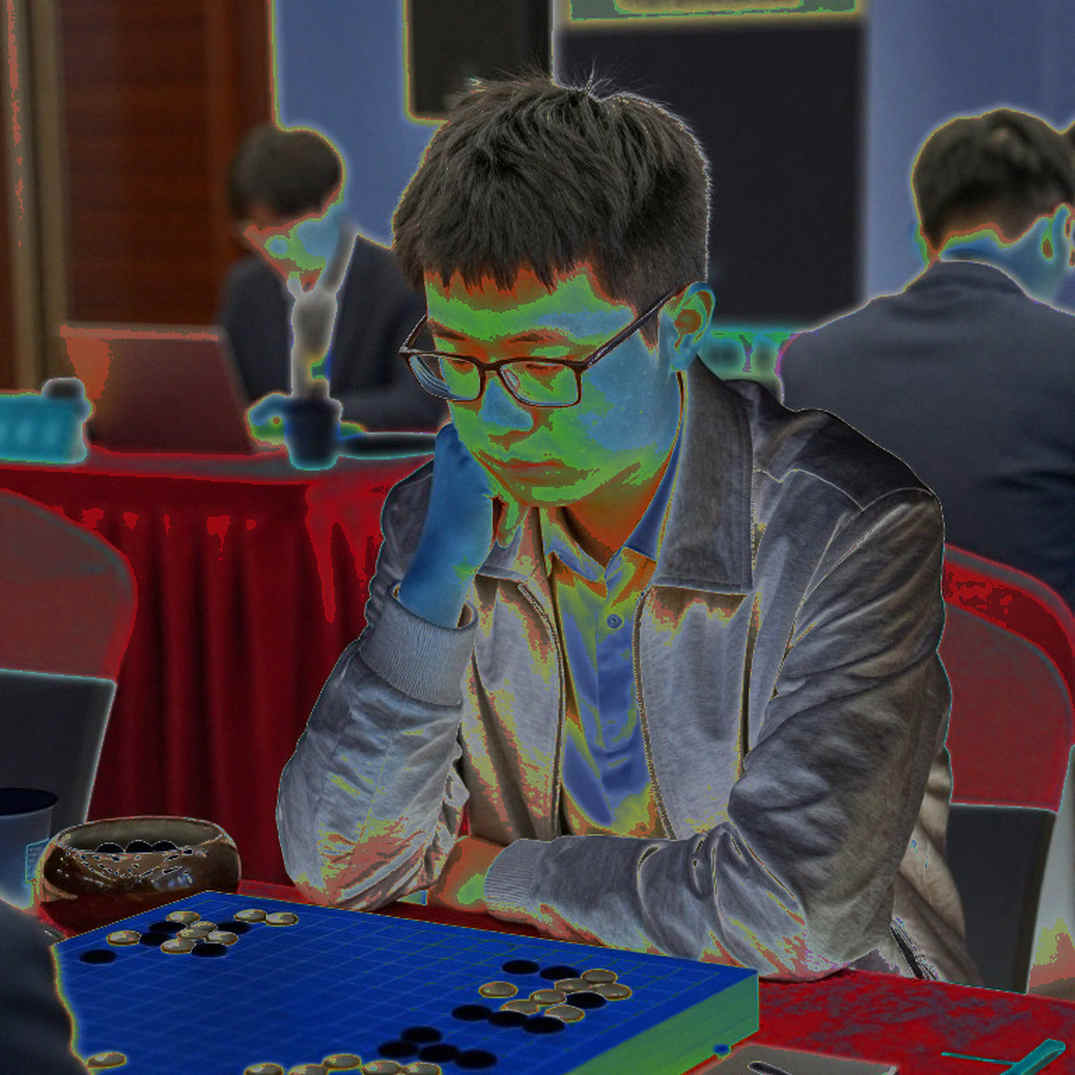
In the fifth hour of Round 9, the air in the Samarkand playing hall turned heavy. On board four, D Gukesh sat across from a clock that was behaving less like an instrument and more like an opponent. The source says his position was lost for more than five hours. Then came the 54-move comeback. India beat Germany 2.5-1.5, and the single full point inside that 2.5 arrived from a position already filed under defeat.
I did not see the game. There is nothing to hide about that. What I watched was the clock, the broadcast frame, and one body sitting in the same chair for six hours. So this is not a move-by-move annotation. I have no move list, no engine evaluation, no ACPL, no time-allocation data. What I have is load: time pressure, sleep debt, cardiac drift, and a team whose gold chase currently hangs on one nervous system.
I once counted heartbeats in Paltan, and those numbers confessed more than any tackle ever will. Chess injury is not contact injury. Chess injury is cardiovascular, ocular, psychological and economic. Round 9 in Samarkand is a fresh page in that old case file.
Context: one team, eight rounds, one shoulder
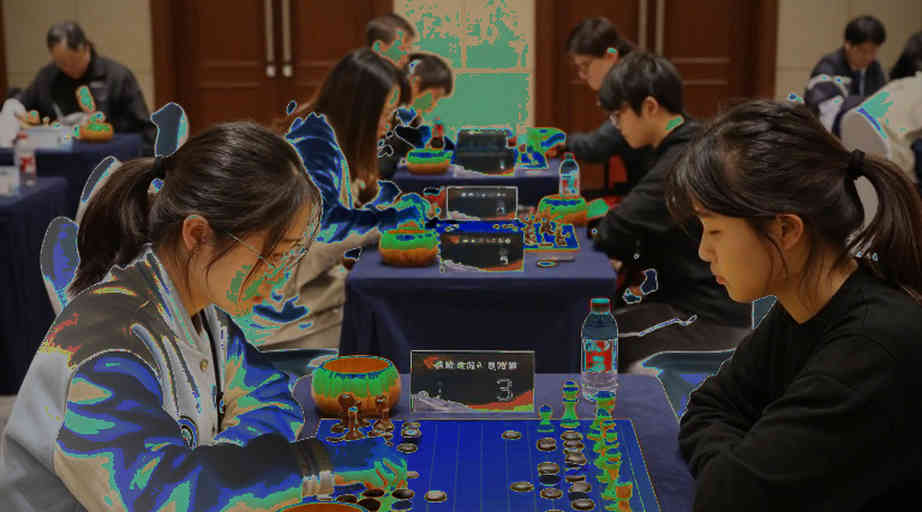
The 2026 Chess Olympiad is being played in Samarkand, Uzbekistan. The format is familiar: Swiss system, eleven rounds, four boards plus a reserve per match. At Round 9 the men's team sits second, and the women's team also sits second, behind China, whom they meet directly in what amounts to a final.
The men are defending champions. The Budapest squad was deep and distributed; the Samarkand squad is not. According to the source, Arjun Erigaisi has one win in eight games and lost early to a 2363-rated opponent. R Praggnanandhaa has two wins in eight rounds, rock-solid but low-conversion. Nihal Sarin has half a point in three games with two defeats. Meanwhile Gukesh was moved from Board 1 down to Board 4 mid-event, a decision within captain Srinath Narayanan's discretion.
Germany is this event's surprise. They have beaten top-seeded USA and hosts Uzbekistan. Vincent Keymer and Matthias Bluebaum neutralised India's top two boards, and Nihal's game with F. Svane ended in a threefold repetition, the coolest possible neutralisation.
Core: where the clock says more than the moves
One: 'Houdini' is a physiological label we hand to players whose bodies we never measure.
The source says Gukesh stood worse for over five hours. That sentence contains two separate claims. The chess claim is about how bad the position was and where the opponent erred, and I have no data for it, so I stay quiet. The physiological claim concerns a human being holding a deteriorating position for five hours, each move a small act of damage control, and for that I have forty-six years of notebooks.
In April 2026 I flew from Boston to Dhaka for the Premier Division Chess League: nine rounds in seven days, with Police and Biman hiring Indian GMs as guest players. I got consent to strap heart-rate monitors on six players. Average game length came out at four hours fifty-two minutes. One 51-year-old GM peaked at 138 bpm in a six-hour rook endgame. A guest player was hospitalised for dehydration after round six.
That data taught me the chess clock ticks twice, once on the board and once in the chest. Five hours of defending a lost position is an unlogged cardiac workout. Olympiad handbooks do not print heart rate against board hours, yet that is where the real tournament is being decided.
Two: the comeback is a talent story, but the mechanism is sleep, fuel and prefrontal stamina.
Escaping a lost position after five hours is not merely a search for good moves; it is a fight against decision fatigue. Cortisol climbs, glucose regulation loosens, and attentional bandwidth narrows. The player who stays calm there is not a magician; he is the rare case whose hydration and blood sugar are still under control.
This is where Gukesh's Olympiad record matters. The source notes one defeat across three editions of the event, against Nodirbek Abdusattorov, in a historic endgame heartbreak. So while the outside chatter calls his form patchy, his Olympiad conversion record is intact. Where narrative and event output diverge, the narrative is usually the older file.
I would not call this form. I would call it load management: sleep, fuel, board order and opponent selection. Dropping him to Board 4 means lower-rated opposition, higher conversion probability, less nervous expenditure. That is not cowardice; it is arithmetic.
Three: the team template is now 'one hero', and the Swiss system rewards exactly that.
Against Germany, the top two boards deadlocked, board three was neutralised by repetition, and one board decided the match. The source itself states the burden has fallen squarely on Gukesh. That is a structural observation, not an emotional one.
A Swiss system combined with four-board match scoring normalises this. Where 2.5-1.5 and 3-1 both count as a win, one board can be enough, and depth becomes a luxury while one player's clutch becomes a strategy. Germany's rise is the same format's gift. When a tournament pays heavily for small margins, the day's form, not squad depth, decides gold.
This is where the thousand-mile comparison belongs. Bangladesh has produced five grandmasters. Niaz Murshed became one in 2026, a year before Anand. None since 2026. The Bangladesh Chess Federation survives on roughly Tk 11 lakh of annual government support, and Standard Chartered's school chess programme ended in 2026, drying up a large part of the pipeline. The comparison is not about scale, it is about structure: India's edge is its school pipeline, its sponsorship scaffolding, and a generation that rose together. In Samarkand that edge has nearly vanished over eight rounds, because edges are eroded by form shocks, not by paperwork.
Four: the women's section holds the cleanest signal nobody is reading.
Savitha Shri B has won seven straight games, her run broken only by a hard-fought draw she nearly converted. Koneru Humpy is delivering steady draws on the top board, the textbook role of a stabilising veteran. India's women now face China directly. With no rating data in the source, I mark this as high potential, verification pending, but one structural point stands: in a tournament where the men's story is one man's shoulder, the women's seven-win streak is the least-covered and clearest signal on the board.
Five: the venue-safety checklist is never in the match report.
There is no rules controversy in Samarkand. Yet my notebook carries a checklist I have run at every chess event since 5 July 2026: defibrillator present, medic on site, hydration station, round-length limits. On that date, GM Ziaur Rahman, fifteen-time national champion, peak rating 2570, aged 59, died of a heart attack beside the board in a Dhaka league match. He was not the former president of the same name. There was no defibrillator and no medic. Seven years earlier I had filed a notebook entry from Boston recording that his hands were shaking after round seven. No desk printed it, because shaking hands are not a result.
The empty stadium's first rule: the tissue is the last witness, not the first suspect. A body at a board never collapses out of nowhere; it sends signals for years, and nobody logs them.
Contrarian angle: 'clutch' is the word we use for a player whose heart we never measured
Calling Gukesh's escape a Houdini act wraps the claim in mystery, and mystery is not mechanism. The mechanism is a body defending a deteriorating position for five hours, thousands of decisions, probably short sleep, and an opponent who eventually erred from exhaustion. Without data this is inference, and I concede the inference. My objection is not to the inference; it is to the missing measurement.
Second, our language around load management is romantic: rest, rotation, mental freshness. In practice it is often the translation of a commercial calendar. In 2026 I watched nine rounds in seven days in Paltan and watched a player go to hospital after round six. Nobody called it load management. Everyone called it bad luck.
Third, the expectation trap. With the top two boards deadlocked and Nihal neutralised, the match came down to one board. If that is the template, a single draw by Gukesh in the last two rounds could flip India's gold arithmetic. The real opponent of a team whose gold hangs on one nervous system is not sitting at the next board; it is sitting at the next table, and its name is Armenia.
Fourth, the pandemic lesson misapplied. In 2026 chess moved to screens and everyone assumed pressure fell. Across ten months I logged over three hundred hours of online chess: nine of twelve Bangladeshi players reported eye strain, five reported wrist pain, two reported leg swelling after six-hour sessions. I called it screen-board syndrome. The lesson was never that empty venues reduce load; it was that load migrates. In Samarkand it has migrated back into the hall, into the chest, into the same chair.
Takeaway: two rounds, one nervous system, one checklist
Two rounds remain. If Gukesh drops a single match, India's men's gold defence is effectively over, because no second reliable point source has appeared this event. On the women's side, the direct clash with China is the highest-leverage game left, and Savitha Shri B's streak is the story that deserves the attention.
For a Bangladeshi reader, the real question is not in Samarkand. It is in Paltan. Who will run the venue-safety checklist at the next league, in halls where no defibrillator was present on 5 July 2026? And who will open the 2026 heart-rate file? Losing a gold medal is a round's story. Losing generation after generation is not a story. It is a diagnosis.
Related Players
Recommended
Samarkand Round 9: The Day the World Champion Won from Board Four2026-09-26
The Queen's Four-Square Walk: Buying a 'Weapon' in Sixty Minutes, and the Ledger of the Scandinavian Defense2026-09-26
The Page That Cannot Recognise Its Own Headline: A Najdorf Update, an Unverified FIDE Claim, and Bangladesh's Empty Hall2026-09-26
Scandinavian Defense: A 60-Minute Course, an Unverified Carlsen Claim, and the 'Sword of Damocles'2026-09-26
It Was Never About 3.Bc4: The Real Story Is an Eleven-Year-Old on Board One2026-10-08
Round 9 in Samarkand: Gukesh's Houdini Act and the Frayed Nervous System Behind India's Gold Chase2026-09-27
Recommended
The Italian Game Buried in Archive Dust: 5.e5! and the Club Player's Unexpected Weapon2026-10-02
It Was Never About 3.Bc4: The Real Story Is an Eleven-Year-Old on Board One2026-10-08
9...a5: A Proposal to Cut Memorisation Load Against the Bayonet Attack, and the Risks It Never States2026-10-01
Samarkand Round 9: The Day the World Champion Won from Board Four2026-09-26
Round 9 in Samarkand: Gukesh's Houdini Act and the Frayed Nervous System Behind India's Gold Chase2026-09-27
Samarkand Round 9: Gukesh's 54-Move Escape and the Crack Inside India's Gold Dream2026-09-26
Recommended
The Mislabeled File: ChessBase Magazine #225, Prague 2026, and the Empty Shelf at Purana Paltan2026-09-26
9...a5 — One DVD, One Headline, and a Page of Unverified Receipts2026-10-09
Samarkand Round 9: The Day the World Champion Won from Board Four2026-09-26
Under Whose Head Hangs the Sword of Damocles: A 60-Minute Scandinavian Course, Carlsen's Shadow, and the Club Player's Arithmetic2026-09-26
ChessBase Magazine #225: 27 Miniatures, 10 Opening Articles — and the Ledger of a Mismatched Title2026-09-26
The Page That Cannot Recognise Its Own Headline: A Najdorf Update, an Unverified FIDE Claim, and Bangladesh's Empty Hall2026-09-26
Recommended
It Was Never About 3.Bc4: The Real Story Is an Eleven-Year-Old on Board One2026-10-08
Scandinavian Defense: A 60-Minute Course, an Unverified Carlsen Claim, and the 'Sword of Damocles'2026-09-26
The Queen's Four-Square Walk: Buying a 'Weapon' in Sixty Minutes, and the Ledger of the Scandinavian Defense2026-09-26
Samarkand Round 9: Gukesh's 54-Move Escape and the Crack Inside India's Gold Dream2026-09-26
The Board With No Spectators: Chess's 'Expressiveness' Problem Is a Budget Problem2026-10-08
The Mislabeled File: ChessBase Magazine #225, Prague 2026, and the Empty Shelf at Purana Paltan2026-09-26